Most footwear ignores one thing.
Support.
Fulton exists to fix that.
Built by Libie Motchan and Daniel Nelson, Fulton is a modern brand of orthopedic insoles and slippers made from cork that molds to your feet and supports your body from the ground up. Made from cork and shaped by wear, the product addresses real problems people face every day.
From plantar fasciitis to knee pain, Fulton serves customers who spend long hours on their feet and need better support from their footwear.
“Our customers are generally people who are experiencing some kind of pain as a result of their unsupportive footwear. There are often people who stand on their feet for many hours a day as part of their job. There’s definitely a range of customers and pain points that we’re speaking to.”

Along with performance, the brand focuses on responsible materials, including plant-based inputs and processes designed to reduce waste at every step.
As the brand expanded, so did the range of customer needs.
“We were getting a better understanding that there’s more diversity in terms of the pain points that customers are trying to solve… the benefits that they’re looking for out of the product are different.”
That created a new problem.
One product page could not speak to everyone.
To move faster and test what actually works, Fulton turned to Pagedeck to build landing pages that could match each customer’s intent.
We recently caught up with Libie Motchan, Co-founder of Fulton, who shared how Fulton moved to Pagedeck to build landing pages that match intent, run continuous tests, and drive greater conversion gains.
The challenge: Landing pages that failed to outperform product pages
As Fulton scaled its paid acquisition, the team began testing dedicated landing pages to improve performance. But despite repeated efforts, these pages consistently failed to deliver better results than their standard product pages.
They tested different tools, worked with built-for-you services, and even built pages inside their Shopify theme. But none of these approaches delivered consistent gains.

This made it difficult to move fast or test at scale.
“It was a combination of too complicated and difficult to set up… so much freedom in terms of what I could build, but without really knowing what the best practice is.”
This lack of clarity led to weak testing outcomes.
“I felt like all the tests that I was doing were kind of giving false negatives… I never really knew what the ideal page to test was.”
Some of the challenges that were hard to ignore and led them to rethink their approach were:
- Landing pages failed to beat product pages in conversion
- No clear signal on what made a test successful
- Different product types made performance harder to compare
- Existing “standard pages” became the only reliable benchmark
- Testing cycles did not lead to clear learnings
The solution: Moving to Pagedeck for faster builds and better-performing pages
After testing multiple tools and workflows, Fulton needed something simple to use yet capable of producing strong results. The goal was to build pages quickly, and to have those pages outperform their standard product pages.
Pagedeck gave them a way to do both. The team could quickly create pages that looked polished, told a clear story, and worked across devices without extra service or technical support.
“I think it was just really easy to set up a landing page that looked really good. It was simple, it told a good story, it aligned with our brand, and it looked good on every single type of device.”
More importantly, it changed how they worked. Instead of building from scratch each time, the team started iterating on strong existing pages, refining and running tests more consistently.
This is how their workflow evolved with Pagedeck:
- Quick setup → Pages could be created and launched without long build cycles
- Reduced dependency on developers → Non-technical team members could handle builds end-to-end
- High-quality templates → Pages started with a strong structure and design by default
- Clean cross-device rendering → No issues with responsiveness across screens and browsers
- Fewer errors → Less time spent fixing broken layouts or formatting issues
- Iteration over reinvention → Existing pages became the base for new tests
- Faster test cycles → Ideas could be launched and validated more frequently
- Clear testing workflow → Compare new versions against existing high-performing pages
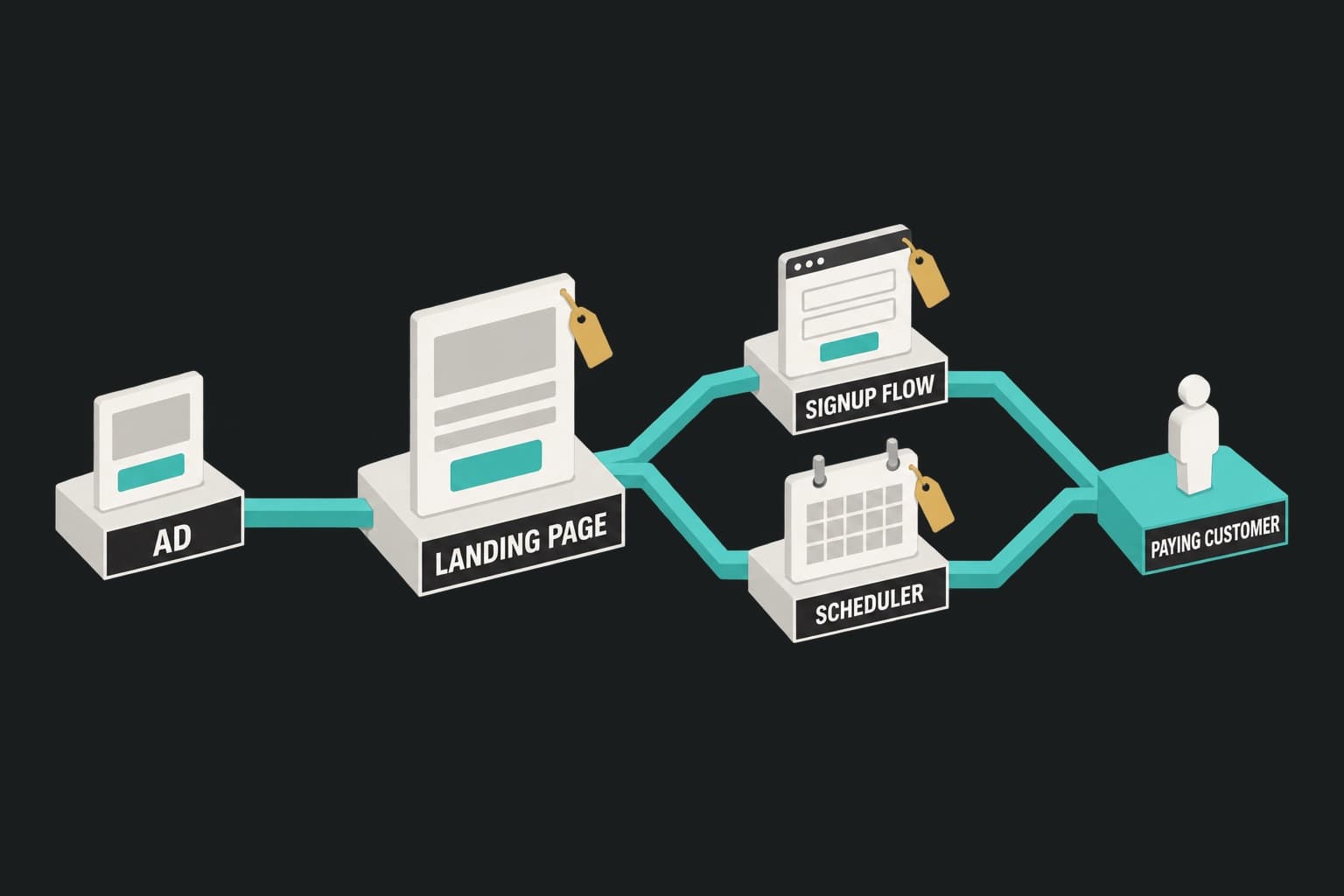
- Integrated into funnel → Pages fit naturally into campaigns without extra setup
The impact: 110% higher conversion rates and faster testing cycles
With Pagedeck, Fulton moved from inconsistent landing page performance to a structured testing system that delivered clear results. Instead of relying on product pages, every campaign now runs through dedicated landing pages built for conversion.

This created a system where each version improved on the last. Small changes added up, and the team could clearly see what was working across campaigns.
“First of all, we drive 100% of our paid traffic to Pagedeck pages… the conversion rate is just meaningfully higher. I think when we first launched, it was like a 60% improvement… now it’s closer to a 110% improvement.”
That shift showed up directly in performance. Landing pages started outperforming product pages and became the default destination for all paid traffic.
Here’s what changed after moving to Pagedeck:
- 110% lift in conversion rate compared to previous landing pages
- 100% of paid traffic routed through Pagedeck pages
- 50+ landing page iterations on a single core page
- Continuous A/B testing across headlines, layouts, and CTAs
- Faster validation of ideas through rapid testing cycles
- Improved clarity on what drives revenue per user
- More consistent results across campaigns
“I would have no idea where to send our traffic if we didn’t have Pagedeck. I don’t really know what we’d do. I’d probably have to go back, dig up old pages, and get someone to rebuild them. I would rate Pagedeck a 10/10.”